
How Physiotherapy Helps Restore Movement in Frozen Shoulder
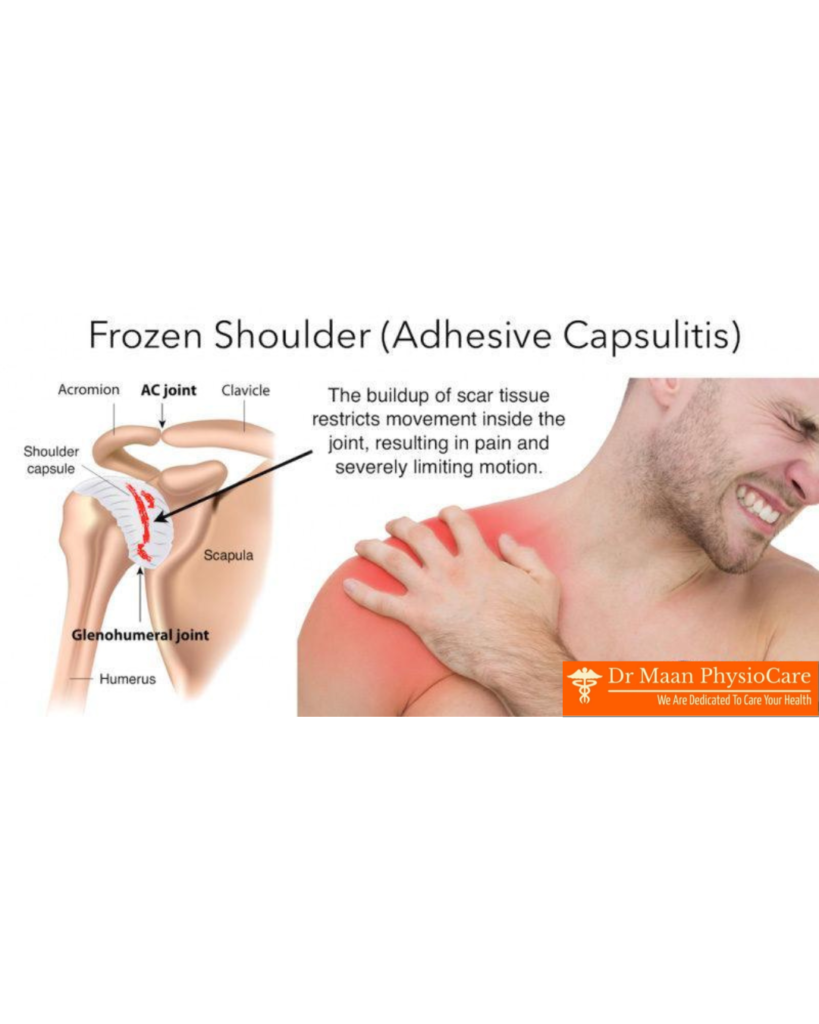
Frozen shoulder, medically known as adhesive capsulitis, is a painful and disabling condition of the shoulder joint characterized by progressive stiffness, pain, and significant restriction of both active and passive movements. It commonly affects middle-aged and older adults and can severely interfere with daily activities such as combing hair, dressing, reaching overhead, or sleeping on the affected side.
1. Anatomy of the Shoulder Joint
The shoulder is a ball-and-socket joint formed by the head of the humerus (arm bone) and the glenoid cavity of the scapula (shoulder blade). This joint is surrounded by a flexible connective tissue envelope called the joint capsule, which contains synovial fluid that lubricates the joint and allows smooth movement. The shoulder has the greatest range of motion of any joint in the human body, making it highly functional but also vulnerable to stiffness and injury.
In frozen shoulder, the joint capsule becomes inflamed, thickened, tight, and contracted, leading to reduced joint space and formation of adhesions. As a result, shoulder movement becomes painful and progressively limited.
2. Definition of Frozen Shoulder
Frozen shoulder is a condition in which the shoulder joint becomes stiff, painful, and difficult to move due to inflammation and fibrosis of the joint capsule. The term “frozen” refers to the severe limitation of movement, while “adhesive” refers to the formation of adhesions within the capsule.
3. Causes and Risk Factors
In many cases, the exact cause of frozen shoulder is unknown. However, several risk factors increase the likelihood of developing this condition:
- Age and Gender: Most commonly affects individuals between 40–60 years; more common in women.
- Diabetes Mellitus: Strongly associated; diabetic patients have a higher incidence and more severe symptoms.
- Prolonged Immobilization: After shoulder surgery, fracture, or injury.
- Previous Shoulder Injuries: Rotator cuff injuries, tendinitis.
- Systemic Conditions: Thyroid disorders, cardiovascular disease, Parkinson’s disease, stroke.
- Post-surgical or Post-traumatic Stiffness: Lack of movement during recovery.
4. Pathophysiology
Frozen shoulder develops due to chronic inflammation of the joint capsule. This inflammation leads to:
- Thickening and tightening of the capsule
- Formation of fibrous adhesions
- Reduction of synovial fluid
- Decreased joint volume
These changes cause pain and progressively restrict shoulder movement in all directions, especially external rotation, abduction, and flexion.
5. Stages of Frozen Shoulder
Frozen shoulder typically progresses through three stages, each lasting several months:
a) Freezing Stage (Painful Stage)
- Duration: 2–9 months
- Gradual onset of shoulder pain, worse at night
- Increasing pain with movement
- Progressive loss of range of motion
b) Frozen Stage (Stiff Stage)
- Duration: 4–12 months
- Pain may decrease, but stiffness becomes severe
- Significant limitation in daily activities
- Shoulder movements are markedly restricted
c) Thawing Stage (Recovery Stage)
- Duration: 6–24 months
- Gradual improvement in range of motion
- Pain significantly reduces
- Shoulder function slowly returns

Frozen shoulder, also known as adhesive capsulitis, is a condition marked by pain, stiffness, and progressive loss of shoulder movement due to inflammation and fibrosis of the shoulder joint capsule. Physiotherapy plays a central and most important role in the conservative management of frozen shoulder. The main goals of physiotherapy are to reduce pain, restore joint mobility, improve muscle strength, and help the patient return to normal daily activities.
Role of Physiotherapy in Frozen Shoulder
Physiotherapy is considered the first-line treatment for frozen shoulder. It focuses on controlled and gradual rehabilitation of the shoulder joint without causing further irritation. Since frozen shoulder passes through different stages, physiotherapy treatment is stage-specific, meaning the approach is adjusted according to pain level and stiffness.
Physiotherapy Assessment
Before starting treatment, a detailed physiotherapy assessment is essential. This includes:
- Patient history (onset of pain, duration, medical conditions like diabetes)
- Pain assessment (severity, night pain, aggravating factors)
- Range of motion assessment (active and passive)
- Muscle strength evaluation
- Postural assessment
- Functional limitations (difficulty in dressing, grooming, reaching)
Based on this assessment, an individualized treatment plan is prepared.
Physiotherapy According to Stages of Frozen Shoulder
1. Freezing Stage (Painful Stage)
This stage is characterized by severe pain and gradually increasing stiffness. The primary goal of physiotherapy during this stage is pain relief and prevention of further stiffness.
Physiotherapy Interventions:
- Pain-relieving modalities such as hot packs, ultrasound therapy, and TENS
- Gentle passive range of motion exercises within pain-free limits
- Pendulum (Codman) exercises
- Gentle stretching exercises
- Postural correction exercises
- Education about activity modification
Aggressive stretching is avoided in this stage as it may worsen inflammation and pain.
2. Frozen Stage (Stiff Stage)
Pain reduces in this stage, but stiffness becomes more prominent. The main aim of physiotherapy is to increase shoulder mobility and maintain muscle strength.
Physiotherapy Interventions:
- Active-assisted and active range of motion exercises
- Joint mobilization techniques (Grade I–III)
- Stretching exercises for shoulder capsule
- Use of pulley exercises and wand exercises
- Isometric strengthening exercises
- Scapular stabilization exercises
Consistency and patient cooperation are crucial during this phase.
3. Thawing Stage (Recovery Stage)
In this stage, both pain and stiffness gradually reduce. The focus of physiotherapy shifts to restoring full range of motion, strength, and functional activities.
Physiotherapy Interventions:
- Progressive stretching exercises
- Strengthening exercises using resistance bands or light weights
- Functional training exercises
- Proprioceptive and coordination exercises
- Advanced joint mobilization techniques
- End-range stretching
Therapeutic Exercises in Physiotherapy
Exercises form the backbone of frozen shoulder rehabilitation.
Common Exercises Include:
- Pendulum exercises
- Finger walk on wall
- Towel stretch behind the back
- Shoulder flexion, abduction, and rotation exercises
- Wand exercises
- Pulley exercises
Exercises should be performed daily, with gradual progression based on tolerance.
Manual Therapy Techniques
Manual therapy is highly effective in improving joint mobility.
- Glenohumeral joint mobilization
- Capsular stretching techniques
- Soft tissue mobilization
- Scapulothoracic mobilization
These techniques help reduce capsular tightness and improve shoulder mechanics.
Modalities Used in Physiotherapy
Electrotherapy modalities help in pain reduction and tissue healing:
- Ultrasound therapy
- TENS (Transcutaneous Electrical Nerve Stimulation)
- IFT (Interferential Therapy)
- Heat therapy (hot packs)
- Cryotherapy (ice therapy, in acute pain)
Modalities are used as an adjunct to exercises, not as a replacement.


Leave a Reply