
Best Treatment in Cervical Pain
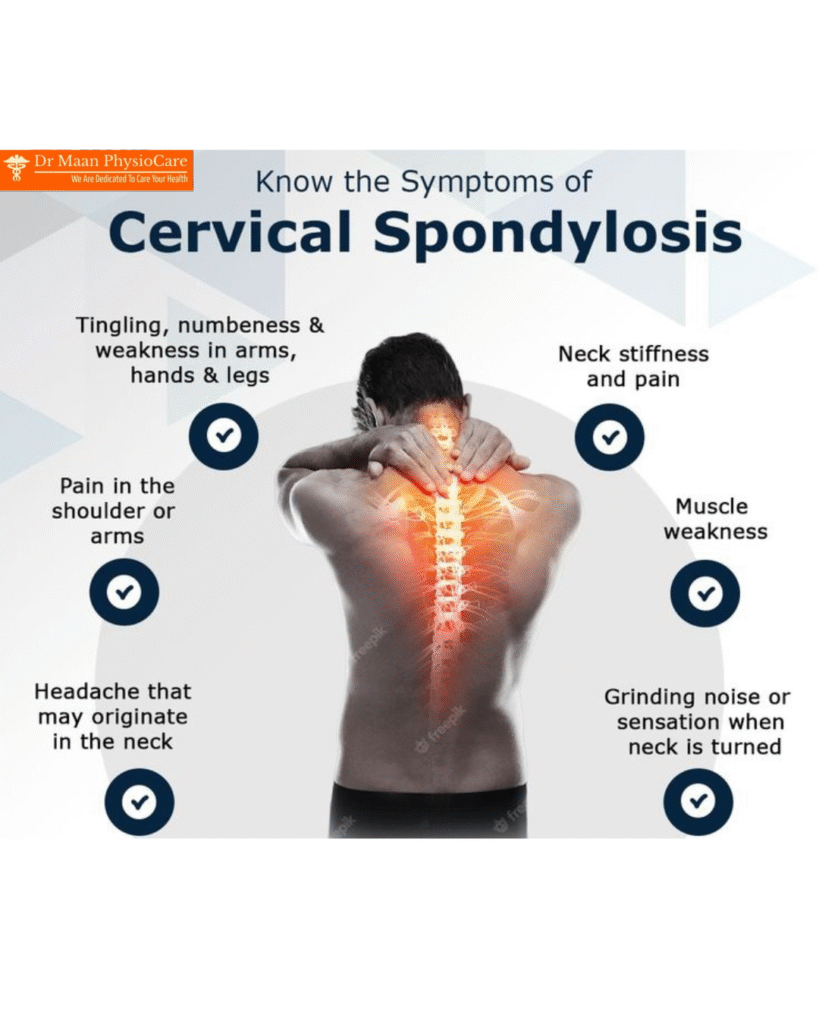
Cervical pain, commonly referred to as neck pain, is one of the most frequent musculoskeletal complaints affecting people of all ages. The cervical spine supports the weight of the head, protects the spinal cord, and allows a wide range of movements including flexion, extension, rotation, and lateral bending. Because of these essential functions and continuous load-bearing responsibilities, the cervical region is highly vulnerable to strain, injuries, postural stress, and degenerative changes.
Neck pain may present as a localized pain in the neck region or radiate to the shoulders, upper back, scapular area, or arms. In more severe cases, it may lead to neurological symptoms such as numbness, tingling, or weakness due to nerve root irritation.
Anatomy of Cervical Region
The cervical spine consists of seven vertebrae (C1–C7). These vertebrae support the skull, allow head movement, and protect spinal cord nerves traveling to the rest of the body.
Important structures involved in cervical pain include:
Bones and Joints
- C1 (Atlas) and C2 (Axis) allow rotational movement of the head.
- Facet joints help stabilize and control cervical motion.
- Intervertebral discs act as shock absorbers.
Muscles
Key muscles which often contribute to cervical pain:
- Trapezius
- Levator scapulae
- Sternocleidomastoid (SCM)
- Scalene muscles
- Deep cervical flexors (longus colli, longus capitis)
Nerves
- Cervical nerve roots exit from the spinal cord and supply sensation/motor control to neck, shoulders, and arms.
Ligaments
- Anterior longitudinal ligament
- Posterior longitudinal ligament
- Ligamentum nuchae
These structures provide spinal stability.
Causes of Cervical Pain
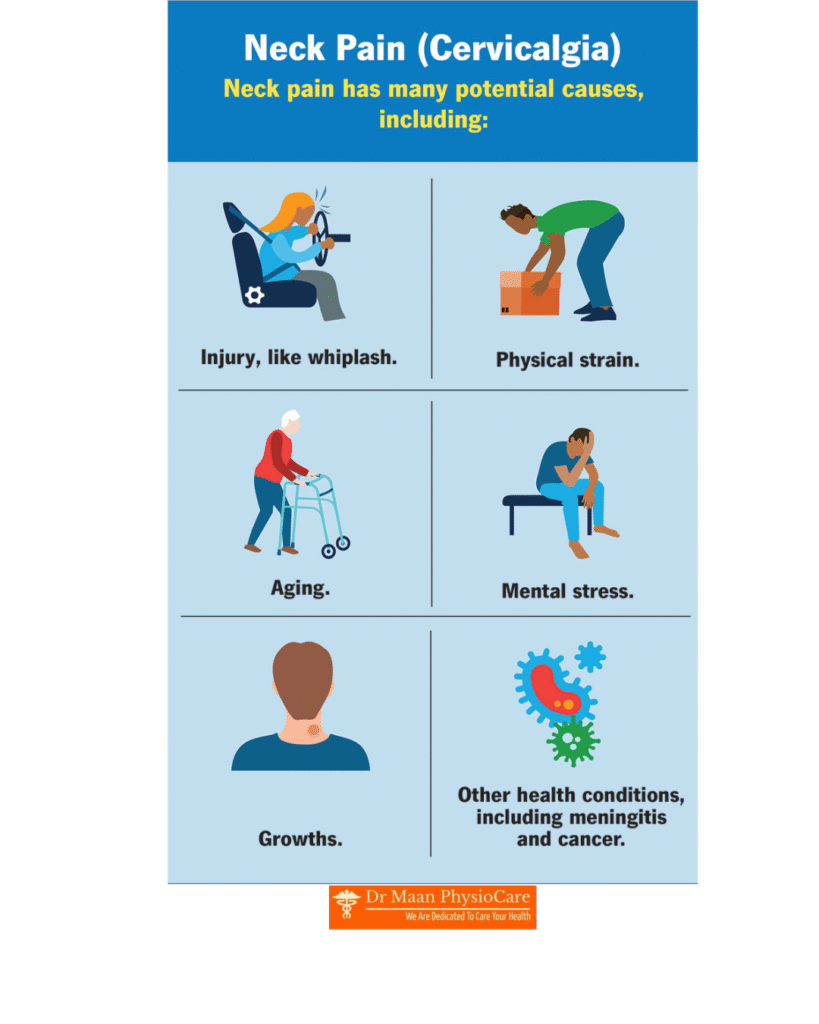
Cervical pain can arise from multiple factors. Major causes include:
1. Poor Posture
Modern lifestyle involves prolonged computer/mobile use leading to Forward Head Posture (FHP) also known as text neck. This increases strain on cervical joints and muscles.
2. Muscle Strain and Overuse
Sudden or repetitive movements may cause microscopic tears in muscle fibers.
3. Degenerative Disc Disease
With age, discs lose water content, become thinner, and fail to cushion vertebrae effectively.
4. Cervical Spondylosis
Age-related wear-and-tear of cervical vertebrae and joints leading to stiffness and chronic pain.
5. Herniated Disc
A displaced disc may press on nerve root causing radicular symptoms.
6. Trauma or Whiplash Injury
Common after road traffic accidents due to sudden acceleration–deceleration forces.
7. Osteoarthritis
Degeneration of facet joints, bone spur formation, inflammation, and pain.
8. Psychological Stress
Emotional stress can increase muscle tension and lead to neck pain.
9. Sleeping Position Issues
Incorrect pillow height or sleeping posture can lead to morning stiffness and pain.
Symptoms of Cervical Pain
Common symptoms include:
- Localized pain in the neck area
- Stiffness and reduced range of motion
- Muscle tightness or spasms
- Headaches (often cervicogenic)
- Pain radiating to shoulders and arms
- Numbness, tingling, or weakness in upper limbs (if nerve compression occurs)
- Difficulty maintaining posture long time
- Grinding or clicking sounds during neck movement (crepitus)
Types of Cervical Pain
1. Mechanical / Musculoskeletal Neck Pain
Caused by muscle strain, joint dysfunction, bad posture.
2. Radicular Pain / Cervical Radiculopathy
Occurs when a nerve root is compressed. Pain radiates along the nerve pathway into the arm.
3. Myofascial Pain Syndrome
Trigger points within tight muscles cause referred pain.
4. Facet Joint Pain
Arises from inflammation or arthritic changes inside facet joints.
5. Whiplash Associated Disorder
Neck injury due to sudden acceleration-deceleration force.
Risk Factors
- Prolonged computer work
- High mobile phone usage
- Sedentary lifestyle
- Age above 40 years
- Occupations requiring repeated neck movement
- Chronic stress and anxiety
- Previous cervical injuries
- Use of heavy shoulder bags
Diagnosis of Cervical Pain
Diagnosis is based on:
History Taking
Pain onset, duration, radiation, occupation, sleeping posture, trauma.
Physical Examination
- Range of motion (ROM)
- Muscle palpation for tenderness or trigger points
- Neurological tests (sensation, reflexes, muscle strength)
- Special tests such as:
- Spurling’s test (for nerve root compression)
- Distraction test
- Shoulder abduction relief test
Investigations
May include:
- X-ray (spine alignment, degeneration)
- MRI (disc herniation, nerve compression)
- CT Scan
- EMG/NCV for nerve conduction
Complications (If Untreated)
If cervical pain is neglected, it may lead to:
- Chronic pain syndrome
- Cervical radiculopathy
- Weakness and muscle wasting
- Postural deformities (forward head, rounded shoulders)
- Persistent headaches
- Reduced productivity & quality of life
- Degenerative cervical myelopathy (rare but serious)
Management and Treatment
Treatment depends on severity but typically includes:
1. Rest and Activity Modification
Avoid prolonged static posture and heavy lifting.
2. Heat or Cold Therapy
- Ice for acute inflammation or trauma
- Moist heat for chronic pain or muscle tightness
3. Pain Medications (prescribed by physician)
- NSAIDs
- Muscle relaxants
- Analgesics
4. Physiotherapy (Most Important Non-surgical Treatment)
A detailed physiotherapy program helps restore mobility, relieve pain, and correct posture.
Common physiotherapy interventions:
a. Therapeutic Exercises
- Cervical range of motion exercises
- Isometric strengthening
- Stretching of upper trapezius, levator scapulae, pectorals
- Strengthening of deep cervical flexors
- Scapular stabilizing exercises
b. Manual Therapy
- Soft tissue release
- Myofascial trigger point therapy
- Joint mobilization
c. Postural Correction
Ergonomic training for workplace and home.
d. Electrotherapy Modalities
- TENS
- Ultrasound therapy
- IFT
- SWD / Heat therapy
e. Traction
Used in cervical radiculopathy for nerve root decompression.
5. Alternative Therapies
- Dry needling
- Acupuncture
- Chiropractic care (performed cautiously by trained professionals)
6. Surgical Interventions
Reserved for severe cases with progressive neurological deficits. Examples:
- Cervical discectomy
- Laminectomy
- Spinal fusion
Prevention of Cervical Pain
Prevention focuses on reducing strain and improving posture:
Ergonomic Recommendations
- Adjust chair and desk height
- Use a chair with good lumbar and cervical support
- Place computer screen at eye level
- Use hands-free device for mobile calls
Postural Habits
- Avoid slouching
- Keep shoulders relaxed
- Take breaks every 30–45 minutes
Exercises
Daily neck stretching and strengthening, especially for people in desk jobs.
Sleep Hygiene
- Correct sleeping posture
- Medium-firm mattress
- Pillow that supports natural cervical curve
Prognosis
The prognosis for cervical pain is generally good with early management. Most people recover within days to a few weeks. Chronic cases require long-term rehabilitation and posture correction. Recovery is typically faster in individuals who maintain regular exercise and ergonomic habits.

Leave a Reply