
Best Treatment in Bell’s Palsy
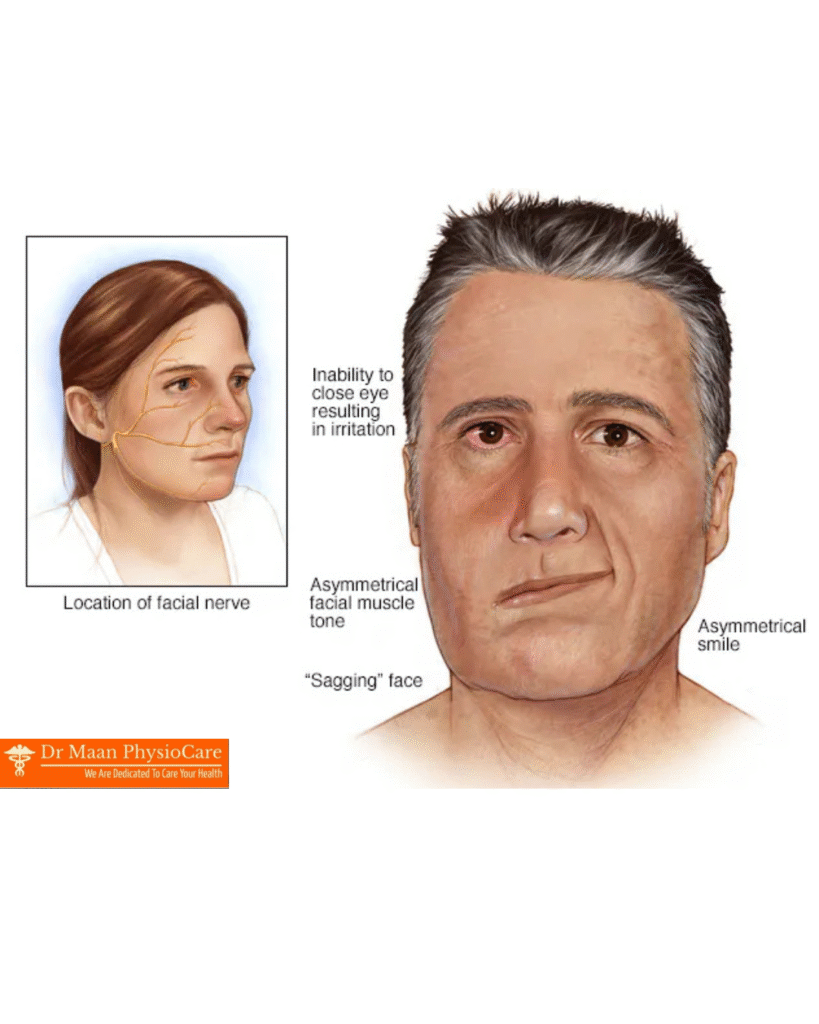
Bell’s palsy is a neurological condition that causes sudden, temporary weakness or paralysis of the muscles on one side of the face. It occurs due to inflammation or compression of the seventh cranial nerve (facial nerve), which controls facial expressions, eye blinking, tearing, salivation, and taste sensations. Although the condition appears alarming, most patients show significant improvement within weeks, and full recovery is common.
Bell’s palsy is named after Sir Charles Bell, a Scottish surgeon who first described the facial nerve and its functions. Understanding this condition requires knowledge of the facial nerve’s pathway, the causes that trigger inflammation, symptoms, risk factors, different clinical stages, and the ways it affects a person’s daily life.
Understanding the Facial Nerve
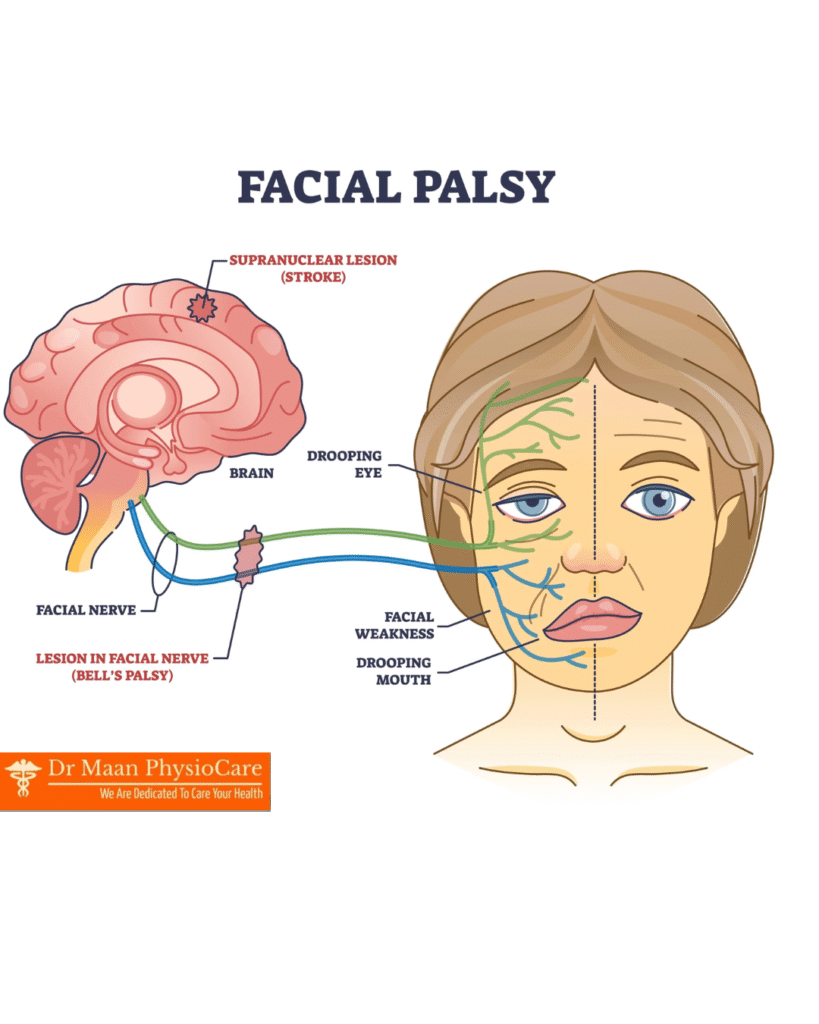
The facial nerve originates in the brainstem and travels through the skull via a narrow bony canal called the Fallopian canal. From there, it branches out to muscles of facial expression. Because the canal is very narrow, any swelling or inflammation compresses the nerve, disturbing its function.
The nerve controls:
- Closing of eyelids
- Smiling, frowning, blowing
- Movements of the forehead
- Taste from front two-thirds of the tongue
- Tear and saliva production
When the nerve is affected, even a small swelling can reduce blood supply, causing weakness or paralysis.
Causes of Bell’s Palsy
The exact cause is not always known, but most cases are associated with viral infections. Common viral triggers include:
1. Herpes Simplex Virus (HSV-1)
The same virus that causes cold sores. This is believed to be the most common cause.
2. Varicella-Zoster Virus
The virus responsible for chickenpox and shingles.
3. Epstein-Barr Virus
Causes infectious mononucleosis.
4. Influenza or other respiratory viruses
These viruses may remain dormant and reactivate, leading to inflammation of the facial nerve.
Risk Factors
Anyone can develop Bell’s palsy, but certain factors increase the risk:
- Diabetes
- Pregnancy, especially third trimester
- High blood pressure
- Upper respiratory infections
- Family history
- Stress and low immunity
- Cold exposure
Signs and Symptoms
Symptoms usually appear suddenly—often overnight—and reach maximum weakness within 48 to 72 hours.
1. Facial Weakness or Paralysis
- Drooping of one side of the face
- Difficulty closing the eye
- Uneven smile
- Problems with facial expressions
2. Eye Symptoms
- Inability to blink
- Dryness or excessive tearing
- Irritation due to lack of lubrication
3. Ear and Hearing Issues
- Pain around the ear
- Sound sensitivity on affected side (hyperacusis)
4. Mouth Symptoms
- Drooling
- Difficulty drinking or eating
- Loss of taste on the front of the tongue
5. Other Symptoms
- Headache
- Pain in the jaw
- Tingling or numbness in the face
Stages of Bell’s Palsy
- Early Stage:
Sudden facial weakness, ear pain, tearing problems. - Progressive Stage:
Facial muscles stop functioning properly, asymmetry becomes obvious. - Recovery Stage:
Nerve repair begins; some movements slowly return. - Synkinesis Stage (if nerve miswires):
Unwanted movements such as eye closing while smiling.
Not everyone reaches the synkinesis stage; many recover completely without complications.
Diagnosis
Diagnosis is mostly clinical, based on symptoms. Tests might include:
- Physical examination of facial movements
- Blood tests to rule out diabetes or infection
- MRI or CT scan (only if symptoms are unusual or recovery is delayed)
- Electromyography (EMG) to assess nerve activity
Types of Bell’s Palsy
1. Complete Paralysis
Total inability to move facial muscles.
2. Incomplete Paralysis
Some movement preserved; better recovery prognosis.
3. Recurrent Bell’s Palsy
Symptoms return after months or years—rare but possible.
4. Bilateral Bell’s Palsy
Both sides affected (very rare).
Impact on Daily Life
Because the face is essential for expression, eating, speaking, and social communication, Bell’s palsy can significantly affect:
- Self-esteem
- Social interactions
- Ability to blink (risk of eye damage)
- Eating/drinking (food leakage)
- Speech clarity
Emotional stress is common, and reassurance is important.
Complications (If not treated early)
- Incomplete recovery
- Facial spasms
- Synkinesis
- Eye ulcers due to dryness
- Tearing problems
Early treatment and physiotherapy significantly reduce these complications.
Management and Treatment
Although most people recover fully, early treatment increases the chances of complete recovery.
1. Medications
- Corticosteroids (Prednisolone): Reduce inflammation; most effective when started within 72 hours.
- Antiviral medications may be added if viral infection is suspected.
- Pain relievers for ear and facial pain.
2. Eye Care
Since blinking is impaired:
- Use artificial tears
- Wear an eye patch while sleeping
- Sunglasses during the day
Prevents dryness and corneal damage.
Natural Recovery Process
Nerve healing can take:
- 3–6 weeks for initial improvement
- 3–4 months for full recovery
Some patients take up to 9 months.
The nerve regenerates slowly at about 1 mm per day.
Physiotherapy Role
Physiotherapy is critical to restore movement, improve symmetry, and prevent complications.
1. Facial Exercises
- Eyebrow lifts
- Gentle eye closure
- Smiling and frowning practice
- Lip pursing
- Cheek puffing
These stimulate the nerve and maintain muscle tone.
2. Massage Therapy
Improves blood flow, reduces stiffness, and relaxes tight muscles.
3. Electrical Stimulation
In some cases, therapists use electrical stimulation to activate weak muscles.
4. Biofeedback Therapy
Helps regain control over facial muscles using monitored signals.
5. Heat Therapy
Warm compresses reduce pain and improve circulation.
Prognosis
- 70–85% recover fully without long-term issues.
- Recovery is faster in patients with incomplete paralysis.
- Children and pregnant women often recover well.
- Early treatment leads to better results.
Patients with severe paralysis may take longer but still show improvement with consistent therapy.
When to Seek Medical Help
Contact a doctor immediately if:
- Symptoms appear suddenly
- You cannot close your eye
- Weakness worsens after 72 hours
- Facial drooping is accompanied by limb weakness (possible stroke)

Leave a Reply