
Best Treatment In Ankle Sprain
Introduction
An ankle sprain is one of the most common musculoskeletal injuries seen in daily life, sports, and occupational activities. It occurs when the ligaments that support the ankle joint are overstretched or torn due to sudden twisting, rolling, or impact. Although ankle sprains are often considered minor injuries, improper treatment or neglect can lead to chronic pain, instability, and recurrent sprains. Early diagnosis, proper management, and rehabilitation are essential for complete recovery.
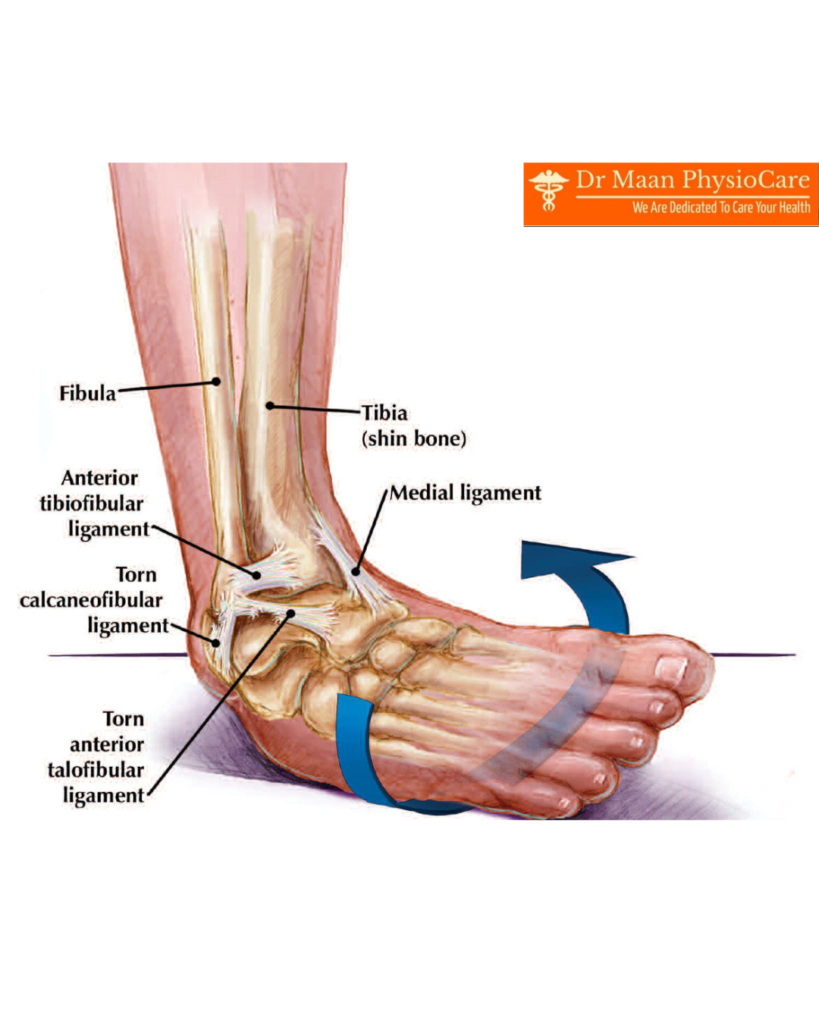
Anatomy of the Ankle Joint
The ankle joint is a complex hinge joint formed by three bones:
- Tibia (shin bone)
- Fibula (outer leg bone)
- Talus (ankle bone)
The stability of the ankle is mainly provided by ligaments, which connect bones to bones. The major ligament groups are:
- Lateral ligament complex (most commonly injured)
- Anterior talofibular ligament (ATFL)
- Calcaneofibular ligament (CFL)
- Posterior talofibular ligament (PTFL)
- Medial ligament (Deltoid ligament) – strong and less frequently injured
- Syndesmotic ligaments – connect tibia and fibula (high ankle sprain)
Definition of Ankle Sprain
An ankle sprain is defined as an injury to one or more ligaments of the ankle due to excessive stretching or tearing, usually caused by an inversion (foot rolling inward) or eversion (foot rolling outward) movement.
Causes of Ankle Sprain
- Sudden twisting of the foot
- Walking or running on uneven surfaces
- Sports activities like football, basketball, cricket, or badminton
- Improper footwear (high heels, loose shoes)
- Slipping, falling, or missing a step
- Weak ankle muscles or previous ankle injury
Types of Ankle Sprain
- Lateral Ankle Sprain
- Most common type
- Caused by inversion injury
- Affects ATFL and CFL
- Medial Ankle Sprain
- Less common
- Caused by eversion injury
- Involves deltoid ligament
- High Ankle Sprain
- Involves syndesmotic ligaments
- Caused by forceful twisting
Goals of Physiotherapy in Ankle Sprain
The main goals of physiotherapy are:
- To reduce pain and swelling
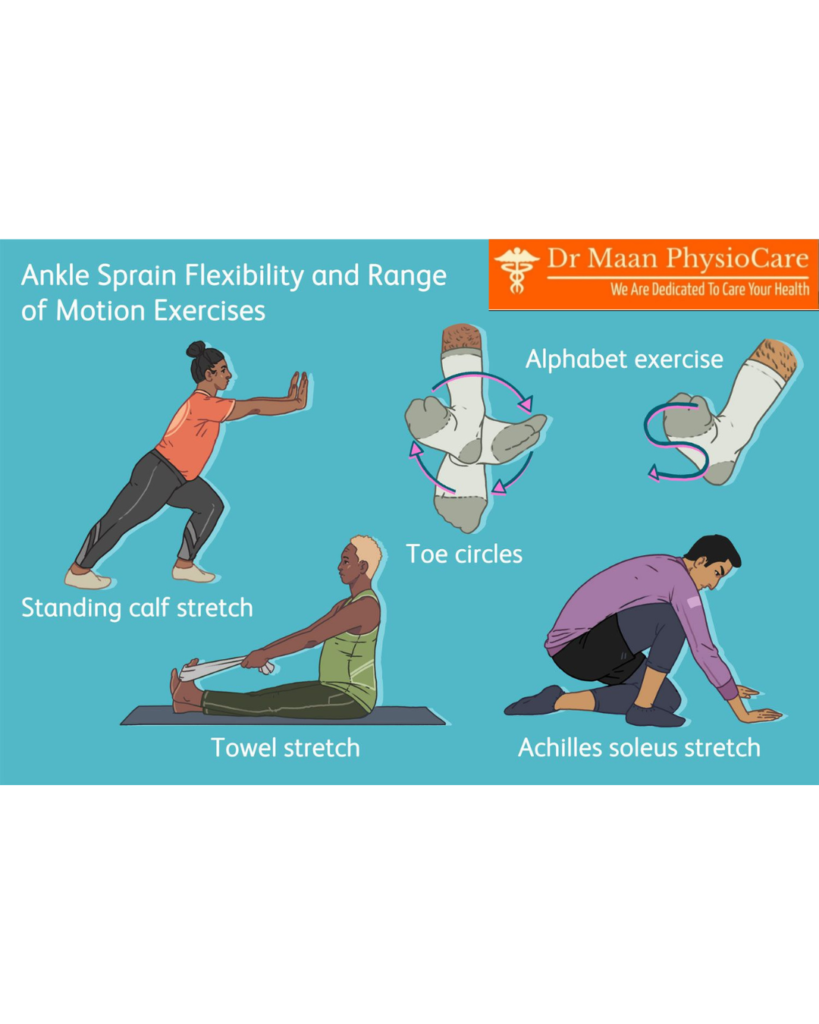
- To restore normal range of motion
- To improve muscle strength
- To enhance balance and proprioception
- To prevent chronic ankle instability and recurrence
Physiotherapy Management
1. Acute Phase (First 48–72 Hours)
During the acute stage, the focus is on pain relief and controlling inflammation.
- Rest: Avoid weight bearing on the affected ankle.
- Cryotherapy (Ice Therapy): Ice packs are applied for 15–20 minutes to reduce pain and swelling.
- Compression: Crepe bandage or ankle support helps control edema.
- Elevation: Keeping the ankle elevated reduces swelling.
- Electrotherapy: Modalities like TENS or ultrasound may be used to reduce pain.
2. Sub-Acute Phase
Once pain and swelling decrease, gentle exercises are introduced.
- Range of Motion Exercises:
- Ankle dorsiflexion and plantarflexion
- Gentle inversion and eversion within pain-free range
- Stretching Exercises:
- Calf muscle stretching to improve flexibility
- These exercises help prevent stiffness and improve joint mobility.
3. Strengthening Phase
As healing progresses, strengthening exercises are essential.
- Isometric Exercises: Early strengthening without joint movement
- Resistive Exercises: Using therabands for ankle movements
- Heel Raises and Toe Raises: Improve calf and ankle muscle strength
Strengthening helps provide stability to the ankle joint.
4. Balance and Proprioception Training
Ankle sprain often affects balance and joint awareness.
- Single-leg standing
- Balance board or wobble board exercises
- Functional training
These exercises improve coordination and prevent future sprains.
5. Gait Training
Physiotherapist helps the patient return to normal walking.
- Gradual weight-bearing exercises
- Correction of walking pattern
- Use of ankle brace if needed


Leave a Reply