
Muscular Dystrophy Treatment Without Surgery | Importance of Physiotherapy
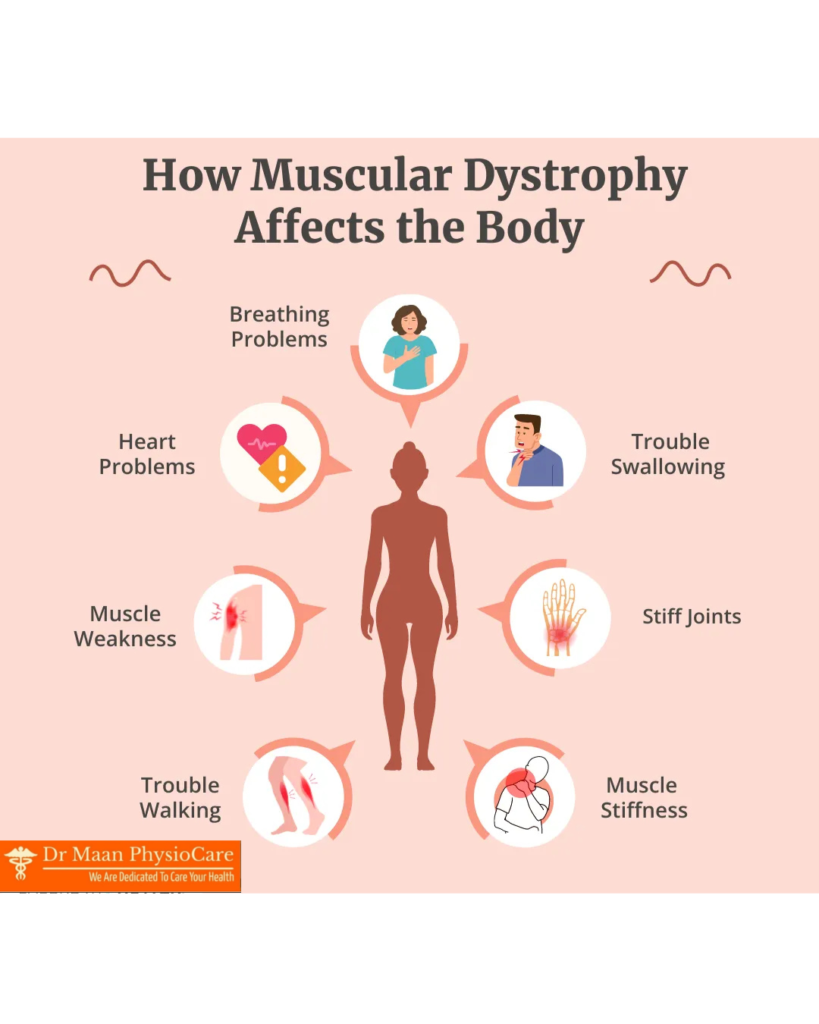
Muscular Dystrophy (MD) is a progressive neuromuscular disorder, and because muscles are fragile and prone to damage, precautions play a critical role in slowing disease progression and preventing complications. Incorrect movements, over-exertion, poor posture, or neglect of respiratory care can accelerate muscle damage and reduce functional independence.
Precautions in muscular dystrophy are required not only during physiotherapy sessions but also in daily activities, exercise routines, posture, respiratory care, nutrition, and emotional well-being. Proper precautions help preserve muscle strength, prevent deformities, reduce pain, and improve quality of life.
General Precautions in Muscular Dystrophy
These precautions apply to all patients regardless of age or disease stage:
- Avoid overuse of weak muscles
- Prevent muscle fatigue
- Avoid high-impact and high-resistance activities
- Maintain proper posture at all times
- Follow a regular physiotherapy routine
- Take adequate rest between activities
- Monitor breathing and heart health regularly
Muscles in MD are easily damaged, so “more exercise” does not mean “better results.”
Physiotherapy-Related Precautions
1. Avoid Over-Exertion
One of the most important precautions in muscular dystrophy is avoiding excessive exercise.
- Do not push muscles to exhaustion
- Stop exercises if pain, tremors, or excessive fatigue occurs
- Avoid long-duration or high-intensity workouts
- Ensure sufficient rest between repetitions
Over-exertion can cause irreversible muscle fiber damage.
2. Avoid High-Resistance Strength Training
Heavy weightlifting or resistance exercises are contraindicated.
❌ Avoid:
- Weight machines
- Heavy dumbbells
- Resistance beyond comfort level
- Sudden forceful movements
✔ Prefer:
- Low-resistance exercises
- Gravity-eliminated movements
- Functional strengthening
3. Avoid Eccentric Muscle Exercises
Eccentric exercises (where muscles lengthen while contracting) can cause severe muscle damage.
Examples to avoid:
- Running downhill
- Jumping activities
- Sudden braking movements
4. Perform Stretching Carefully
Stretching is important but must be done gently and pain-free.
Precautions:
- No jerky or forceful stretching
- Hold stretches slowly for 20–30 seconds
- Never stretch beyond pain threshold
- Avoid overstretching weak muscles
5. Monitor Pain and Fatigue
Pain is a warning sign.
- Pain during or after physiotherapy should not be ignored
- Muscle soreness lasting more than 24 hours indicates overuse
- Fatigue should recover with rest
Physiotherapy should reduce discomfort, not increase it.
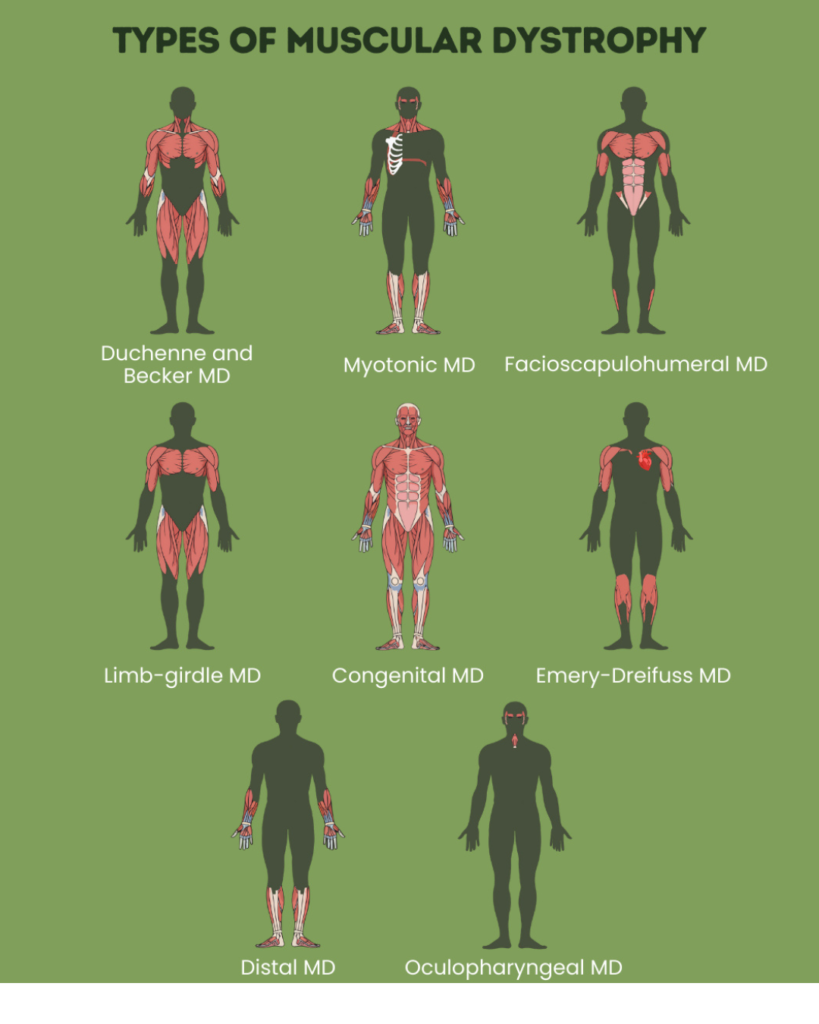
Types of Muscular Dystrophy
Muscular Dystrophy ek single disease nahi hai, balki genetic muscle disorders ka group hai. Har type ka onset age, symptoms aur severity alag hota hai.
1️⃣ Duchenne Muscular Dystrophy (DMD)
✔ Most common & severe type
✔ Mostly boys mein hota hai
✔ Symptoms 2–5 years ki age mein start
Main Features:
- Jaldi muscle weakness
- Chalne mein dikkat
- Baar-baar girna
- Gower’s sign positive
- Early loss of walking ability
2️⃣ Becker Muscular Dystrophy (BMD)
✔ Duchenne ka milder form
✔ Teenagers ya young adults mein start hota hai
Main Features:
- Muscle weakness slow progression
- Patient zyada time tak walk kar sakta hai
- Heart problems ho sakti hain
3️⃣ Limb-Girdle Muscular Dystrophy (LGMD)
✔ Shoulder aur hip muscles affect hoti hain
Main Features:
- Seedhi chadhne mein problem
- Uthne-baithne mein difficulty
- Upper arms aur thighs weak ho jaati hain
4️⃣ Myotonic Dystrophy
✔ Adult onset MD
✔ Muscle relax hone mein problem (myotonia)
Main Features:
- Muscle stiffness
- Weak grip strength
- Heart, eyes aur endocrine system bhi affect hota hai
5️⃣ Facioscapulohumeral Muscular Dystrophy (FSHD)
✔ Face, shoulders aur upper arms affect hote hain
Main Features:
- Muskurane mein dikkat
- Aankh poori band na hona
- Arms upar uthana mushkil
6️⃣ Congenital Muscular Dystrophy
✔ Birth se ya infancy mein present hota hai
Main Features:
- Baby mein severe weakness
- Late sitting / walking
- Poor muscle tone
7️⃣ Emery-Dreifuss Muscular Dystrophy
✔ Rare type
✔ Heart involvement common
Main Features:
- Early contractures
- Shoulder & calf weakness
- Cardiac conduction problems
8️⃣ Distal Muscular Dystrophy
✔ Hands aur feet ke muscles affect hote hain
Main Features:
- Grip weak ho jaana
- Foot drop
- Fine motor skills affect

Leave a Reply