
Best Treatment In Meniscus Tears
Meniscus injury is one of the most common knee injuries seen in sports persons, physically active individuals, and even older adults. The meniscus is a crucial structure of the knee joint that helps in shock absorption, load transmission, joint stability, and smooth movement. Damage to the meniscus can lead to pain, swelling, restricted movement, and long-term complications like knee osteoarthritis if not managed properly. Physiotherapy plays a very important role in both conservative and post-surgical management of meniscus injuries.
Anatomy of the Meniscus
The knee joint contains two menisci:
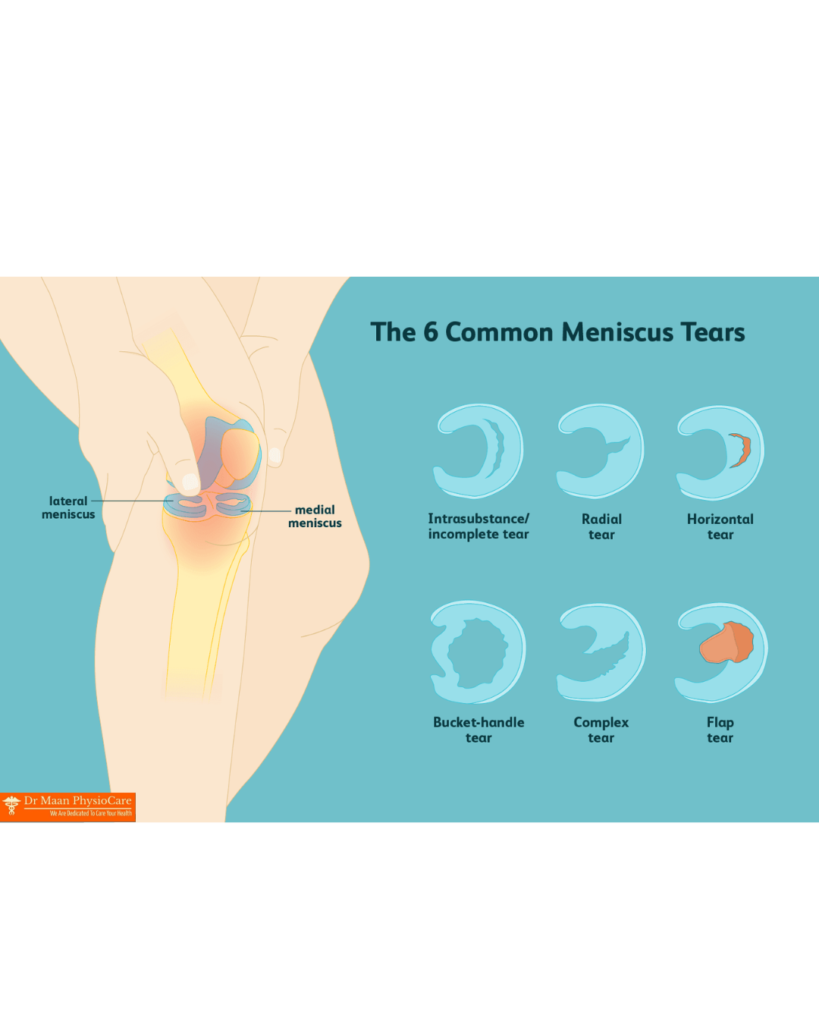
- Medial meniscus – located on the inner side of the knee, C-shaped, less mobile, and more commonly injured.
- Lateral meniscus – located on the outer side of the knee, O-shaped, more mobile, and less frequently injured.
Menisci are made of fibrocartilage and are situated between the femur (thigh bone) and tibia (leg bone). They help to:
- Absorb shock during walking, running, and jumping
- Distribute body weight evenly across the knee joint
- Improve joint stability
- Reduce friction between bones
What is a Meniscus Injury?
A meniscus injury occurs when there is a tear or damage to the meniscal cartilage. It can happen suddenly due to trauma or gradually due to wear and tear. Meniscus tears are very common in sports like football, cricket, basketball, and badminton, where twisting movements of the knee are frequent.
Causes of Meniscus Injury
Meniscus injuries can occur due to various reasons:
- Traumatic Causes
- Sudden twisting of the knee
- Pivoting movements while foot is fixed on the ground
- Squatting or lifting heavy weight incorrectly
- Sports injuries (football, kabaddi, wrestling)
- Degenerative Causes
- Age-related wear and tear
- Weak cartilage due to aging
- Knee osteoarthritis
- Minor movements causing tear in elderly patients
- Associated Injuries
- ACL injury
- Knee ligament injuries
- Direct blow to the knee
Types of Meniscus Tears
Meniscus tears are classified based on their pattern:
- Longitudinal Tear
- Radial Tear
- Horizontal Tear
- Bucket Handle Tear
- Flap Tear
- Complex Tear
The severity of symptoms depends on the type, size, and location of the tear.
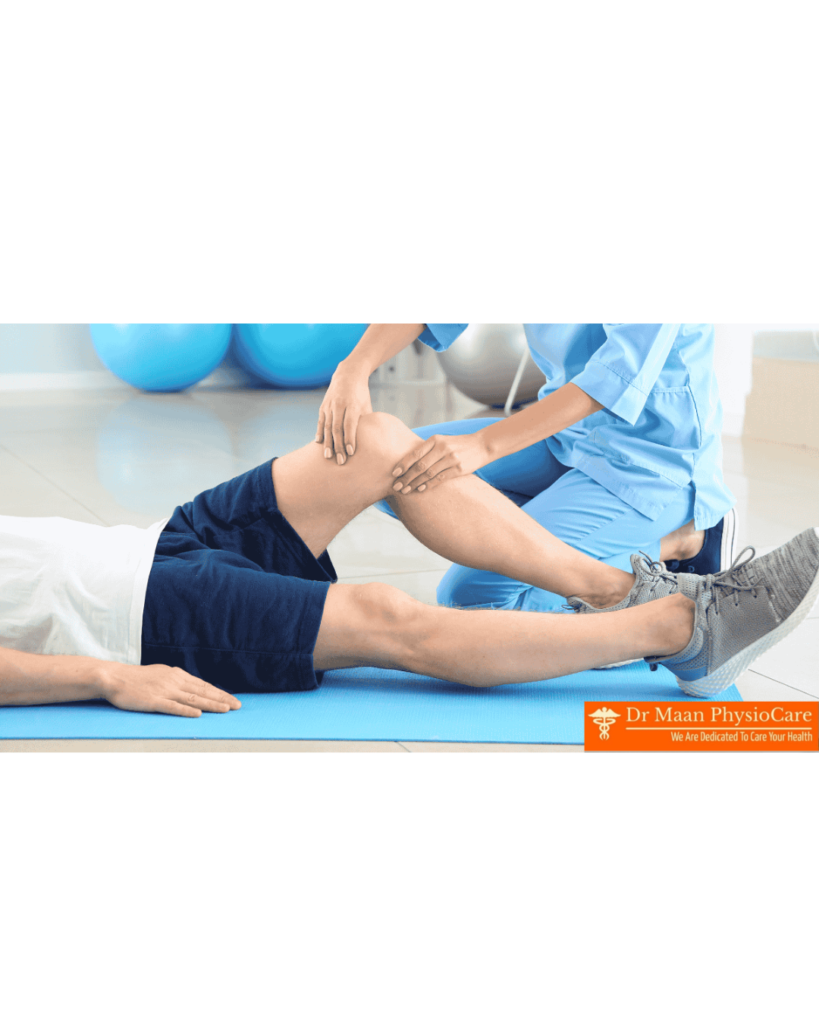
Meniscus injury is one of the most common knee problems seen in sports persons, working adults, and elderly individuals. The meniscus plays a vital role in shock absorption, load transmission, joint lubrication, and knee stability. When the meniscus is injured, knee function is affected, leading to pain, swelling, stiffness, and difficulty in daily activities like walking, squatting, or climbing stairs. Physiotherapy exercises are the backbone of meniscus injury rehabilitation, whether the treatment is conservative or post-surgical. A structured and phase-wise exercise program helps restore knee mobility, strength, stability, and function while preventing long-term complications such as osteoarthritis.
Goals of Physiotherapy Exercises in Meniscus Injury
The main goals of physiotherapy exercises include:
- Reducing pain and swelling
- Restoring normal range of motion (ROM)
- Improving quadriceps and hamstring strength
- Enhancing knee stability and proprioception
- Preventing stiffness and muscle wasting
- Improving functional activities and gait
- Enabling safe return to sports or daily activities
Phases of Physiotherapy Rehabilitation
Physiotherapy exercises are divided into phases depending on the severity of injury and whether surgery has been performed.
Phase 1: Acute Phase (0–2 Weeks)
Goals:
- Control pain and swelling
- Prevent knee stiffness
- Maintain muscle activation
Exercises in Acute Phase
1. Quadriceps Setting Exercise
- Patient lies in supine position with legs straight
- Tighten the thigh muscles by pushing the knee downward
- Hold for 5–10 seconds
- Relax and repeat
Repetitions: 10–15 reps, 2–3 times daily
Benefits: Prevents quadriceps weakness and knee stiffness
2. Ankle Pumping
- Move ankle up and down
- Perform slow and controlled movements
Repetitions: 20–30 reps
Benefits: Improves blood circulation and reduces swelling
3. Heel Slides
- Lie on your back
- Slowly bend the knee by sliding the heel towards the buttocks
- Return to starting position
Repetitions: 10–15 reps
Benefits: Improves knee flexion and reduces stiffness
4. Straight Leg Raise (SLR)
- Lie on your back with one knee bent and injured leg straight
- Tighten quadriceps and lift the leg up to 30–40 cm
- Hold for 5 seconds and slowly lower
Repetitions: 10 reps, 2 sets
Benefits: Strengthens quadriceps without knee movement
5. Isometric Hamstring Exercise
- Lie on back with knee slightly bent
- Push heel into the bed without moving the knee
- Hold for 5 seconds
Repetitions: 10 reps
Benefits: Maintains hamstring strength

Leave a Reply