
Best Treatment In Ataxia
Introduction
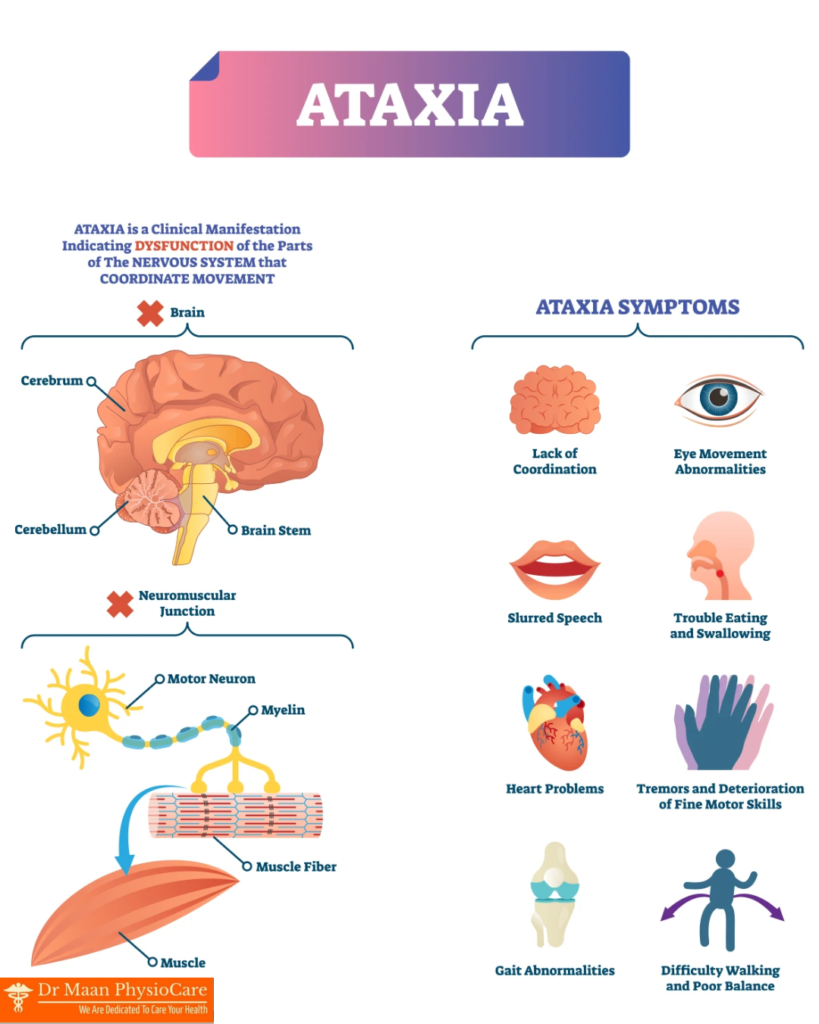
Ataxia is a neurological condition characterized by loss of coordination of voluntary movements, despite normal muscle strength. The term “ataxia” is derived from the Greek word meaning “without order.” People with ataxia have difficulty controlling movements of the arms, legs, trunk, eyes, and speech. The condition affects balance, posture, walking, and fine motor skills, making daily activities challenging.
Ataxia is not a disease itself but a clinical sign of underlying neurological dysfunction. It most commonly results from damage to the cerebellum, the part of the brain responsible for coordination, balance, and motor learning. Physiotherapy plays an important role in managing ataxia by improving balance, posture, functional mobility, and independence.
Anatomy and Role of the Cerebellum
The cerebellum is located at the back of the brain, beneath the cerebral hemispheres. It works closely with the cerebral cortex, brainstem, vestibular system, and spinal cord to coordinate smooth and accurate movements.
Functions of the Cerebellum
- Regulation of balance and posture
- Coordination of voluntary movements
- Control of muscle tone
- Motor learning and timing of movements
- Eye movement coordination
Damage to the cerebellum or its pathways disrupts these functions, leading to ataxia.
Types of Ataxia
Ataxia can be classified based on the affected system or underlying cause.
1. Cerebellar Ataxia
This is the most common type and results from direct damage to the cerebellum.
Features:
- Wide-based, unsteady gait
- Poor balance
- Dysmetria (inaccurate movements)
- Intention tremor
- Slurred speech (dysarthria)
- Nystagmus (involuntary eye movements)
2. Sensory Ataxia
Occurs due to damage to the sensory pathways that carry proprioceptive information to the brain.
Features:
- Difficulty walking in the dark
- Heavy stamping gait
- Reliance on visual input for balance
- Positive Romberg’s sign
3. Vestibular Ataxia
Caused by dysfunction of the vestibular system in the inner ear or brainstem.
Features:
- Vertigo
- Dizziness
- Nausea
- Unsteady gait with veering to one side
- Head movement intolerance
Causes of Ataxia
Ataxia can be acquired, genetic, or idiopathic.
Acquired Causes
- Stroke (especially cerebellar stroke)
- Brain tumors
- Traumatic brain injury
- Multiple sclerosis
- Chronic alcohol abuse
- Vitamin B12 deficiency
- Infections (encephalitis, meningitis)
- Drug toxicity (antiepileptics, chemotherapy)
Genetic Causes
- Friedreich’s ataxia
- Spinocerebellar ataxias (SCA)
- Ataxia telangiectasia
Other Causes
- Degenerative neurological disorders
- Autoimmune conditions
- Metabolic disorders
Clinical Features of Ataxia
The symptoms depend on the type and severity of ataxia.
Motor Symptoms
- Unsteady, wide-based gait
- Poor trunk control
- Difficulty with fine motor tasks
- Overshooting or undershooting movements
- Clumsiness
Speech and Eye Symptoms
- Slurred, slow speech
- Irregular speech rhythm
- Nystagmus
- Difficulty focusing eyes
Functional Problems
- Difficulty standing without support
- Frequent falls
- Difficulty writing, eating, or dressing
- Reduced independence in daily activities
1. Effect on Balance and Posture
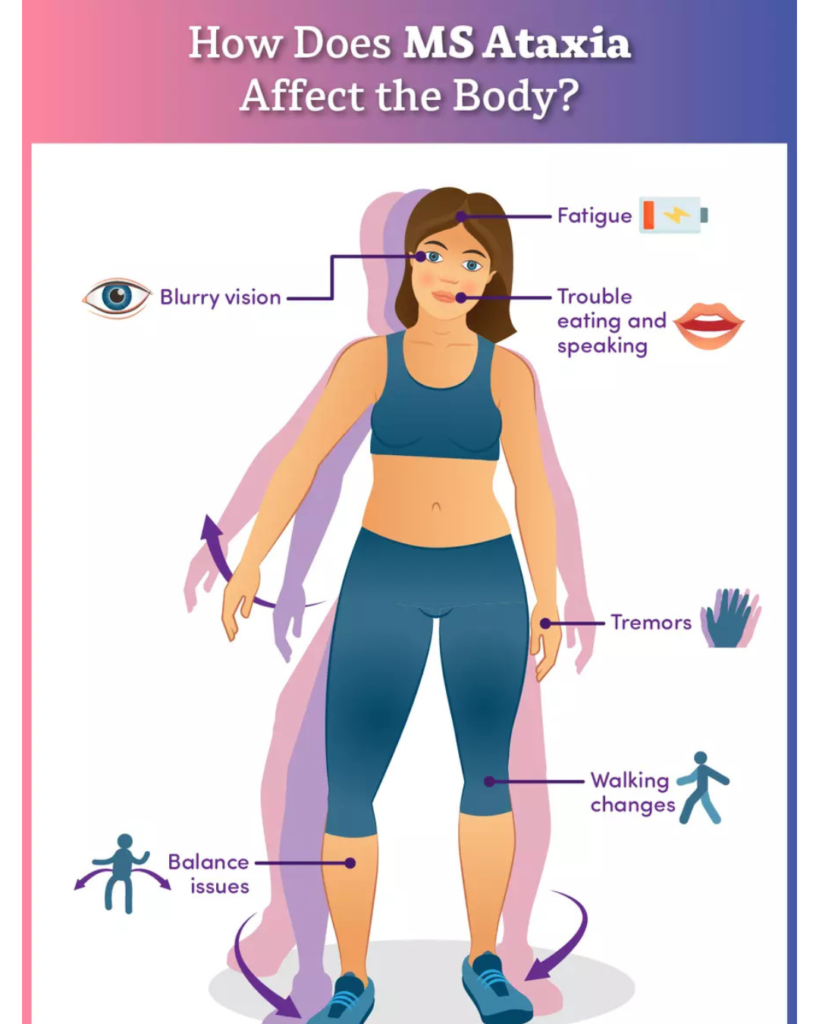
One of the earliest and most noticeable effects of ataxia is poor balance.
- Difficulty maintaining an upright posture
- Unsteady standing, especially without support
- Increased sway while standing
- Trouble maintaining balance when turning or changing direction
- High risk of falls
People often adopt a wide-based stance to compensate for instability.
2. Effect on Gait (Walking)
Ataxia significantly alters walking patterns.
- Wide-based, irregular gait
- Unsteady and staggering walk (often compared to a “drunken” gait)
- Difficulty walking in a straight line
- Poor coordination between steps
- Inability to walk on uneven surfaces
In severe cases, walking without support becomes impossible.
3. Effect on Limb Coordination
Ataxia causes loss of precise control of arm and leg movements.
- Difficulty performing smooth, accurate movements
- Overshooting or undershooting targets (dysmetria)
- Clumsiness in hand movements
- Difficulty with fine motor tasks like writing, buttoning clothes, or using utensils
- Tremors during voluntary movements (intention tremor)
These issues affect daily activities and independence.
4. Effect on Muscle Control and Tone
Muscle strength is usually preserved, but control is impaired.
- Reduced ability to regulate muscle force
- Delayed muscle activation
- Poor timing of muscle contractions
- Hypotonia (reduced muscle tone) in some cases
This leads to inefficient and unstable movements.
5. Effect on Speech (Dysarthria)
Ataxia affects the muscles involved in speech.
- Slurred speech
- Slow, irregular speech rhythm
- Difficulty controlling volume and pitch
- Speech may sound scanning or robotic
This can interfere with communication and social interaction.


Leave a Reply